
England at the World Cup: A Complete History
England won the World Cup in 1966. In the sixty years since, they have reached the semi-finals twice — in Italy in 1990 and in Russia in 2018 — and the quarter-finals four more times. They have gone out on penalties more often than any other major nation in international football. They have produced some of the tournament's most dramatic moments and experienced some of its most painful. They invented the game, hosted the greatest tournament in its history and produced the most celebrated winning captain the competition has ever had. And still, in sixty years, they have not come close to repeating it.
This is the complete story. Every tournament. Every exit. Every image that has lodged in the national consciousness and refused to leave.
1950 — Brazil: The American Nightmare
England's first World Cup. After decades of refusing to enter, the Football Association finally agreed to participate in Brazil 1950. England were among the favourites, widely regarded as the founding fathers of the modern game and one of the strongest nations in international football. They lost to the United States 1-0. One of the most improbable results in the history of the tournament. They were subsequently eliminated in the group stage, going home after drawing with Spain. The pride of English football had its first meeting with World Cup reality.
1954 — Switzerland: Round One, Out
England again failed to get beyond the quarter-finals, losing 4-2 to Uruguay in the last eight. Uruguay had beaten them in 1950 too, becoming something of an early nemesis. England were not yet a force capable of imposing themselves on the tournament structure.
1958 — Sweden: Withdrawal
England did not qualify, missing out on a World Cup that included the debut of a 17-year-old Brazilian named Pele who would go on to score twice in the final.
1962 — Chile: Quarter-Final Exit
England qualified and reached the quarter-finals before losing to Brazil, the eventual winners. A respectable performance that suggested progress was being made without yet delivering a breakthrough.
1966 — England: THEY WON IT
The crowning moment. Alf Ramsey's England defeated West Germany 4-2 in extra time at Wembley on 30 July 1966 with Bobby Moore lifting the Jules Rimet Trophy as captain. Geoff Hurst scored a hat-trick — the only one in a World Cup Final — including the most debated goal in the history of the competition, his second which struck the crossbar and bounced down on or over the line, depending on who you ask. Bobby Charlton drove the team with his authority and his goals. Gordon Banks was extraordinary in goal. The whole tournament told the story of a team becoming something greater than the sum of its parts under a manager who believed in them completely. England are the only home nations team to have won the World Cup and this remains the defining moment in the history of English football.
1970 — Mexico: Quarter-Final, Banks' Save, Bonetti's Mistake
The tournament that produced Gordon Banks' save against Pele — still widely regarded as the greatest save in football history, the South African-born keeper somehow getting his right hand under a downward-bound header that Pele had already shouted "goal" for — and also produced England's most heartbreaking exit in the pre-1990 era. Defending champions against West Germany in the quarter-finals. England led 2-0. Banks was ill and replaced by Peter Bonetti. Germany scored twice to equalise. Gerd Muller won it with a volley in extra time. England went home. The save is remembered. The defeat is also remembered.
1974 — West Germany: Did Not Qualify
England failed to qualify for the 1974 World Cup, finishing third in their qualification group behind Poland and Wales. The Poland goalkeeper Jan Tomaszewski — called a "clown" by Brian Clough on television — kept out everything England threw at him at Wembley in the decisive qualifying match. Clough was wrong. England did not qualify.
1978 — Argentina: Did Not Qualify
England again failed to reach the finals, missing out on the tournament Archie Gemmill lit up with his goal for Scotland against the Netherlands.
1982 — Spain: Group Stage Exit
England returned to the World Cup and were unbeaten in the tournament — losing no matches — yet still went home in the second group stage having drawn with West Germany and Spain and failing to score the goals needed to advance. Kevin Keegan and Trevor Brooking, both struggling with fitness, came off the bench in the final group game and both missed chances that might have taken England through. Unbeaten and out. The particular cruelty of the format at its most stark.
1986 — Mexico: Quarter-Final, Maradona's Two Faces
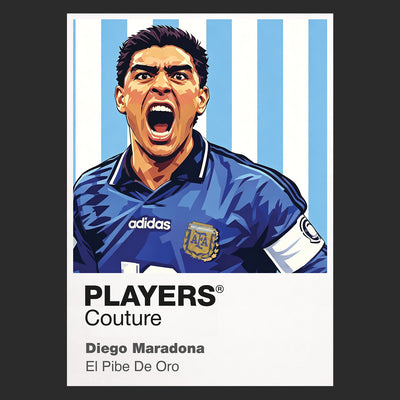
The tournament with Maradona. England reached the quarter-finals and faced Argentina — the Falklands War had ended four years earlier and the political backdrop was impossible to separate from the football. Maradona scored twice. The first, with his left hand, which referee Ali Bin Nasser did not see and which Maradona described as the "hand of God." The second, five minutes later, sixty yards and five beaten England players — the greatest goal ever scored. Gary Lineker pulled one back with his fifth goal of the tournament to win the Golden Boot. England lost 2-1. They had seen two of the most famous moments in World Cup history in a single thirty-minute period. Paul Gascoigne was not yet in the squad. He would be four years later.
1990 — Italy: The Semi-Final, the Tears, the Penalties
Italia 90. The tournament that created a generation of English football supporters and gave the nation something to carry forever. England reached the semi-finals for the first time since 1966, with Paul Gascoigne playing the most brilliant and most emotional football of his international career. His tears when booked in the semi-final against West Germany — knowing he would miss a final he might not reach — became the defining image of English sport in that decade. England drew 1-1 after extra time. They lost on penalties. Chris Waddle and Stuart Pearce missed. West Germany went to the final. England went home. Gary Lineker pointed to Bobby Robson on the touchline as if to say: don't worry. It was worth it anyway.
1994 — USA: Did Not Qualify
England failed to reach the tournament in their own language's country, finishing behind Norway and the Netherlands in qualification. Graham Taylor's time as manager ended shortly after. He was not treated kindly by the tabloid press.
1998 — France: The Beckham Red Card
Round of 16 against Argentina. England led. Argentina equalised. David Beckham, on the ground after a foul from Diego Simeone, flicked his right boot back towards Simeone's legs. Simeone went to ground theatrically. The referee produced a red card. England played the second half and extra time with ten men. Michael Owen's goal in the first half — sixty yards, five seconds, one of the great World Cup goals — already felt like another time. England lost on penalties. Sol Campbell had a perfectly good goal disallowed. Beckham was vilified by the English press and public in a manner that reflected very poorly on both. He came back. He was brilliant at the 2002 World Cup. But 1998 defined his relationship with England and England's relationship with penalties.
2002 — South Korea/Japan: Quarter-Final Exit
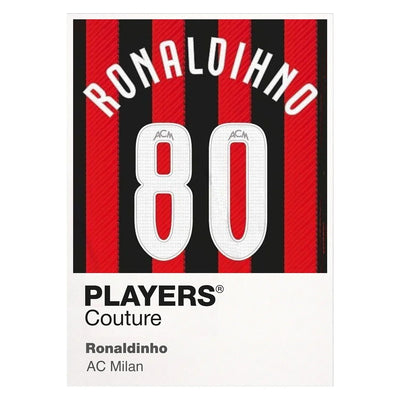
Beckham's redemption. He had been vilified after 1998 and returned as captain. He scored the penalty against Argentina in the group stage — the most emotionally loaded moment of that tournament — and England reached the quarter-finals before losing 2-1 to Brazil. Ronaldinho's extraordinary free kick looped over David Seaman. England could not find an equaliser. They went home without penalty heartbreak for once, but also without progressing as far as the semi-final.
2006 — Germany: Quarter-Final Penalties, Again
Sven-Goran Eriksson's Golden Generation. Rooney, Lampard, Gerrard, Terry, Beckham, Cole. England reached the quarter-finals against Portugal and lost on penalties — again. Wayne Rooney was sent off for stamping on Ricardo Carvalho. Ronaldo's wink after the red card defined the narrative. Ricardo saved penalties from Lampard, Gerrard and Carvalho. England went home. Peter Crouch had scored England's goal in the group stage against Trinidad and Tobago and then done the robot. It was the best thing that happened to England at the entire tournament.
2010 — South Africa: The Ghost Goal and Round of 16 Defeat
Frank Lampard's shot against Germany bounced clearly over the line with the score at 2-1. The referee and linesman did not give it. Germany went on to win 4-1. The goal line technology debate that followed changed how football officiates its matches globally — Lampard's ghost goal directly led to the introduction of goal line technology at the 2014 World Cup. England went home. Capello's squad was criticised for a lack of spirit and a lack of connection with their supporters. They were not wrong.
2014 — Brazil: Group Stage Exit
England went out in the group stage for only the second time in their World Cup history, losing to Italy and Uruguay and drawing with Costa Rica. Roy Hodgson's squad simply was not strong enough and the early exit without a point from the difficult two opening matches was a low point. The team that lost to Luis Suarez's Uruguay was the team that needed to be rebuilt and the rebuilding that followed over the next four years produced the squad that reached the 2018 semi-final.
2018 — Russia: Semi-Final, Coming Home, Going Home
The first World Cup in which it genuinely felt like England might win it in a generation. Harry Kane won the Golden Boot with six goals. England won on penalties for the first time in their World Cup history, beating Colombia in the round of 16. They reached the semi-finals by defeating Sweden. They faced Croatia, led to that game by a first-half Kieran Trippier free kick, lost in extra time to a Mario Mandzukic goal and came home having produced the most sustained performance at a World Cup since 1990. It Came Home did not happen. But it came closer than it had since 1966.
2022 — Qatar: Quarter-Final Defeat to France
England's best squad in a generation and a genuine chance to go deep into the tournament. They dispatched Senegal in the round of 16 and faced France in the quarter-final. Kane missed a penalty with the score at 1-1 that would have put England ahead. France led through a Tchouameni goal and Olivier Giroud's header. Kane pulled one back with a penalty. His second attempt to equalise hit the crossbar. England lost 2-1. The missed penalty is the image that lingers from England's campaign at the 2022 World Cup and the motivation that Kane carries into 2026.
2026 — North America: The Next Chapter
Thomas Tuchel has told England's players the target is to win it. The squad has Kane, Bellingham, Rice and Saka at the heart of it. The draw has been kind. The tournament starts on 17 June against Croatia in Dallas. This is sixty years since 1966. This is the squad and the manager and the moment. Whether England write the next chapter in the same ink as the last depends on what happens between June and July in North America. Explore the full England football fanwear collection at Players Couture — the players who have made this history and the ones who are about to add to it.
















0 comments