
The 2026 FIFA World Cup is the biggest football tournament in history. For the first time, 48 nations will compete - up from 32 - spread across three host nations (the United States, Canada and Mexico) in 16 cities and 16 stadiums. The expanded format means 104 matches, new confederations getting additional places, and genuine first-time qualifiers from nations that have never before walked out at a World Cup.
It also means more nations to support, more drama in the group stage, and - if you need a reason - more nations to wear at Players Couture. Our World Cup 8-Bit collection celebrates the nations competing this summer in the most distinctive way possible. Here's your complete guide.
The Format - How 48 Teams Works
The expanded tournament uses a new group stage format. Twelve groups of four teams each - rather than the eight groups of four used in the 32-team format. The top two from each group qualify automatically for the round of 32. The eight best third-placed teams also advance, bringing the total to 32 teams for the knockout stage.
This means a team can now exit the group stage having won one match and lost one - if the loss is heavy enough and the third-place standings are unkind. It also means there are more matches to care about, more nations in the mix, and a group stage that runs for longer than the traditional format allowed.
The Host Nations
United States 🇺🇸
The United States co-host for the second time - they hosted alone in 1994, when average attendances broke the World Cup record. The American stadiums are the largest in the world: the MetLife Stadium in New Jersey, the Rose Bowl in Pasadena, and the AT&T Stadium in Dallas will all host matches, with capacities of 80,000 or more. The final will be held at the MetLife Stadium. The American football public has grown significantly since 1994 - the MLS has expanded, the USMNT has produced genuine talent - and the host nation's run will be watched with enormous interest.
Canada 🇨🇦
Canada appear in their first World Cup since 1986 - where they were eliminated without scoring a goal - having qualified from CONCACAF in impressive style. They finished top of the CONCACAF qualifying group. Alphonso Davies, Jonathan David, and Tajon Buchanan give them genuine attacking threat. As a co-host, they have automatic qualification and home support. This is, by some distance, the most exciting moment in Canadian football history.
Mexico 🇲🇽
Mexico have qualified for every World Cup since 1950 and reached the quarter-finals or further on multiple occasions. As a host nation, the Azteca Stadium in Mexico City - one of the most atmospheric venues in world football - will host matches, including the opening game. Mexico's passionate supporters will make the tournament feel like a home competition for large stretches.

UEFA - Europe's 16 Nations
Europe receives 16 places in the expanded 48-team format - up from 13. The likely European contingent includes the strongest nations in world football: England, France, Spain, Germany, Portugal, Netherlands, Italy, Belgium, Croatia, Denmark, Switzerland, Scotland, Turkey, Austria, Poland and Serbia. The precise qualification will be determined by the UEFA qualifying process, but Europe's depth of talent means that 16 places still leaves strong nations at risk of missing out.
England 🏴
England are one of the pre-tournament favourites. Jude Bellingham at Real Madrid, Bukayo Saka at Arsenal, Phil Foden at Manchester City, Cole Palmer at Chelsea - the attacking quality available to the England manager is genuinely world-class. The question, as it has always been with England, is whether the collective will match the individual excellence.

France 🇫🇷
The defending runners-up. France have the deepest squad in world football - Mbappe, Griezmann, Camavinga, Tchouameni, Upamecano, Maignan. They have the experience of reaching the 2022 final and losing on penalties. The hunger to go one further and win their third World Cup will be the fuel for their campaign.

Germany 🇩🇪
Germany are rebuilding under Julian Nagelsmann and showed genuine promise at Euro 2024 on home soil, reaching the quarter-finals. Florian Wirtz, Jamal Musiala, Kai Havertz- the next generation of German talent is exciting. A fourth World Cup title is not out of the question.

Netherlands 🇳🇱
The Netherlands reached the semi-finals at Qatar 2022 and have a squad built around Virgil Van Dijk's defensive excellence and a new generation of attacking talent. They have never won the World Cup - they lost the final in 1974 and 1978. The wait continues, but the 2026 squad gives them genuine hope.

Portugal 🇵🇹
Portugal have assembled a formidable squad around Ronaldo's likely twilight tournament. Bruno Fernandes, Bernardo Silva, Rafael Leao and Vitinha give them genuine quality beyond their ageing captain. Whether Ronaldo, at 41, plays a significant role remains to be seen - but Portugal's collective strength is their best argument for a first World Cup title.

Spain 🇪🇸
Spain are the current European champions - they won Euro 2024 in Germany playing some of the finest football seen from a national side in a decade. Lamine Yamal, Pedri, Nico Williams, Fabian Ruiz- this generation of Spanish talent is genuinely extraordinary. If they maintain that form through 2026, they will be among the two or three leading contenders for the title.

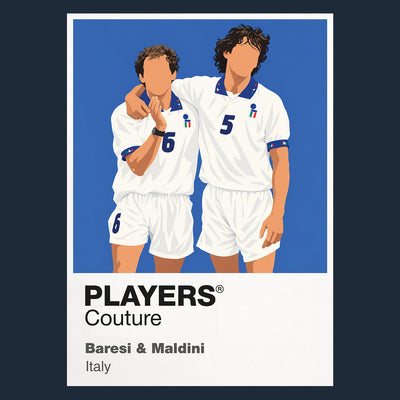
Italy 🇮🇹
Italy famously failed to qualify for the 2018 World Cup - a catastrophic absence for one of football's great nations. They were back for 2022 and will be present in 2026. Four-time world champions with a proud defensive tradition, Italy are always capable of going deep in a tournament even when expectations are modest.

CONMEBOL - South America's 6 Nations
South America receives six places - up from four and a half. Brazil, Argentina, Uruguay, Colombia, Ecuador, and Venezuela or Chile are the likely qualifiers. South America's two powerhouses - Brazil and Argentina - arrive with the strongest combined pedigrees of any confederation.
Argentina 🇦🇷
The reigning world champions. Argentina won the 2022 World Cup in Qatar under Lionel Scaloni's management, with Messi delivering a tournament performance for the ages. They return as holders, with Messi likely playing in his final World Cup at 38. The question is whether they can retain the trophy - which no nation has done since Brazil in 1958 and 1962. Julian Alvarez, Enzo Fernandez and Lautaro Martinez give them genuine quality alongside and beyond Messi.

Brazil 🇧🇷
Brazil have not won the World Cup since 2002. That 24-year wait, for a nation of five titles and the most celebrated football culture on earth, is a source of deep frustration. Vinicius Junior, Rodrygo, Endrick, and a generation of exceptional talent give them their strongest argument in years. The Mineirazo of 2014 - seven goals conceded at home - remains a scar that this generation is determined to heal.

Uruguay 🇺🇾
Uruguay are one of football's great sleeping giants - two World Cup titles (1930 and 1950), a proud defensive tradition, and consistently punching above their weight for a nation of just 3.5 million people. Darwin Nunez, Federico Valverde and Ronald Araujo give this generation genuine world-class quality. They will not be easy to beat.

CAF - Africa's 9 Nations
Africa receives nine places in the expanded tournament - up from five. Morocco, Senegal, Nigeria, Ivory Coast, Egypt, Ghana, Cameroon, South Africa, and Algeria or Tunisia are the likely qualifiers. After Morocco's extraordinary semi-final run at Qatar 2022, African football arrives in 2026 with genuine belief that the continent can produce a World Cup finalist - or more.
Browse the Morocco collection and the Senegal collection at Players Couture.
AFC - Asia's 8 Nations
Asia receives eight and a half places - a significant increase from the previous allocation. Japan, South Korea, Australia, Iran, Saudi Arabia, Qatar, and two or three more Asian nations will compete. Japan have consistently impressed at recent World Cups - reaching the knockout stage at 2022 and defeating Germany and Spain in the group stage. They are the most technically sophisticated Asian team in the tournament's history.
CONCACAF - North & Central America's 6 Nations
Beyond the three host nations, CONCACAF receives three additional automatic places. The United States, Canada and Mexico are all host nations with automatic qualification. Costa Rica, Panama, Jamaica and others will compete for the additional spots through qualifying.
OFC & New Qualifiers
The expanded format gives the Oceania Football Confederation (OFC) a full automatic place for the first time. New Zealand, Tahiti and other Pacific nations will compete for it. It also means that nations qualifying for their first World Cup is a genuine possibility - 2026 may produce several first-timers from Africa, Asia and the Pacific.
Who Will Win the 2026 World Cup?
The honest answer is that no prediction made twelve months before the tournament begins should be trusted entirely. Form changes. Injuries happen. Tournaments have their own logic.
But if forced to identify the leading contenders: France, Spain, England and Argentina are the four most likely to win it. Brazil and Germany have the history and the talent to reach the final. Portugal, with Ronaldo or without, cannot be dismissed. And there will be one team - perhaps Morocco, perhaps Japan, perhaps a South American qualifier - who arrives without expectation and leaves having written one of the great tournament stories.
The 2026 World Cup will be the biggest, the loudest, and potentially the most dramatic in football history. Get ready.
Shop the 8-Bit World Cup Collection
Celebrate your nation this summer with the Players Couture World Cup 8-Bit collection- hoodies and t-shirts featuring the retro pixel-art team kits that captured a generation of football fans. Available in men's, women's and kids' sizes, made to order, hand finished in England.








0 comments