Alex Lundqvist: a defining face in 1990s menswear
Alex Lundqvist’s career belongs to the moment when men’s fashion modelling began to command a more visible place in popular culture. In the 1990s, designers, photographers and magazines were building a new visual language for menswear. The male model was no longer simply a figure who demonstrated how a suit fitted. A distinctive face could carry a campaign, create a recognisable mood and become part of the story people remembered about a brand. Lundqvist was one of the figures who helped establish that idea.
Born in Sweden in 1972, Lundqvist began modelling in 1994. His verified Models.com biography describes work with leading menswear designers and brands and places him among the original male supermodels. The Swedish model’s career quickly became international. In the mid-1990s, fashion images were travelling through glossy magazines, department-store advertising, billboards and increasingly global runway schedules. Models were the visual link between a designer’s collection and the public. Lundqvist’s presence across this landscape made his face familiar to audiences who followed fashion, even when they might not have known the names of every photographer, stylist or creative director involved.
One of the most recognisable chapters in his career was his work for Guess. The agency biography notes that he appeared in a number of Guess campaigns from 1995 to 1997. Those campaigns were part of the brand’s distinctly cinematic approach to advertising, using carefully composed photographs to suggest a world around the clothes. Lundqvist’s role in that visual storytelling illustrates how modelling can be more than posing in front of a camera. A successful campaign depends on expression, posture, lighting and the way a person seems to inhabit the image. These details allow a photograph to communicate confidence or ease without needing a written explanation.
He also worked with major fashion houses including Calvin Klein, Dolce & Gabbana, Valentino, Gucci and Hugo Boss, according to his representation. The range is significant because each label asks for a different kind of visual character. A campaign for tailored clothing may depend on restraint and precision. A fashion editorial can call for a more experimental attitude. Menswear in the 1990s was developing a broader vocabulary, from minimalism and sharp tailoring to relaxed sportswear and high-impact designer imagery. Moving between those worlds required a model to adapt while remaining recognisable. Lundqvist’s long list of clients reflects that balance.
His visibility was not confined to still photography. A widely seen Hugo Boss advertising campaign helped bring his image to television audiences, a reminder that fashion careers were expanding across media. In a 1998 Independent interview, Lundqvist spoke about the demands and practical realities of modelling, showing a grounded perspective alongside the glamour attached to the work. That article captures an industry in which travel, castings and long days formed the daily routine behind the polished final image. It also reflects how the public began to take an interest in the people whose faces appeared repeatedly in fashion advertising.
Male models from this period are often remembered through images rather than conventional biographies. Their influence can be seen in the way brands now build campaigns around recognisable personalities and in the expectation that a model can communicate a whole attitude through a single frame. Lundqvist’s career offers a route into that history. The 1990s were a time when fashion photography reached wide audiences and menswear acquired a stronger cultural profile. Models helped make clothing feel connected to lifestyle, music and personal identity, rather than simply to the practical question of what to wear.
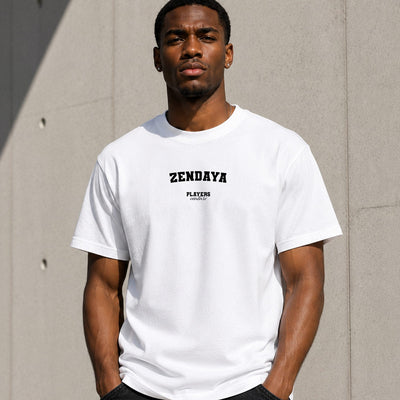
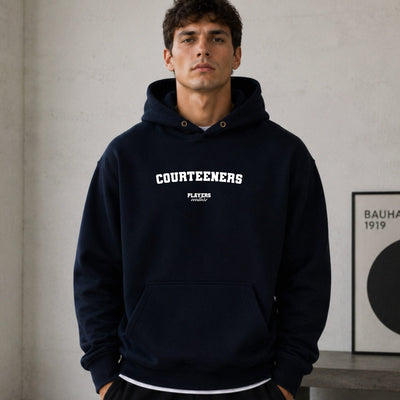
That is why the name works as a Players Couture design. It is a concise reference to a specific figure and a particular era of fashion imagery. For people who followed 1990s campaigns, it can recall the distinctive look of that period. For newer audiences, it points towards the history of menswear modelling and the contribution of Swedish models to international fashion. The name-led treatment leaves room for the wearer to bring their own interpretation. This is independent fan-inspired apparel, not official merchandise or a collaboration with Lundqvist, a fashion house or an agency.
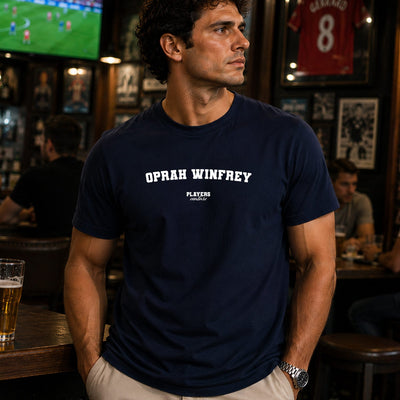
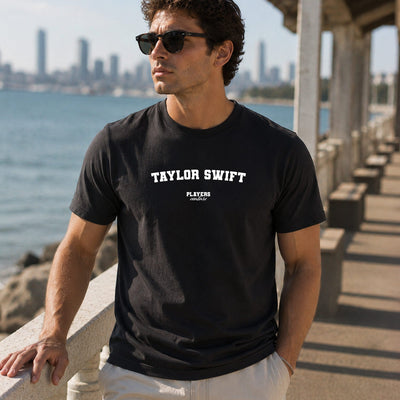
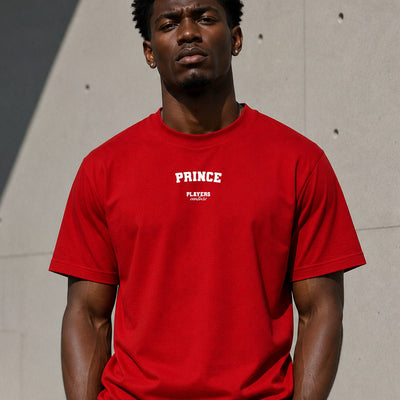
The T-shirt is a casual way to wear that reference beyond a fashion event. It pairs easily with jeans, straight-leg trousers or shorts, and can sit beneath an open shirt, overshirt or jacket. White and Gray make a quiet base for a simple outfit, while Navy and Black provide darker everyday options. Red gives the design a brighter presence. The style is intended for people who enjoy fashion history, photography and the visual culture around clothing, as well as those who recognise Lundqvist’s name from the period.
This men’s T-shirt is made from soft ringspun cotton with a regular fit and crew neck. It is designed for comfortable everyday wear, rather than for sport or technical performance. Sizes are S, M, L, XL, 2XL and 3XL. If you prefer more room, compare the size guide with a T-shirt that fits you well and consider choosing the next size up. It is available in White, Navy, Red, Black and Gray, giving you a choice between neutral and more expressive colours.
Each shirt is made to order and printed in the United Kingdom. Producing a garment after an order is placed reduces the need to hold large quantities of finished pre-printed stock. UK delivery is free. This makes the T-shirt a thoughtful gift for a fashion enthusiast, a collector of 1990s culture or someone with an interest in the models who helped shape modern menswear advertising. For care, follow the label, wash inside out with similar colours on a cool cycle and avoid bleach. Do not iron directly over the print. Air drying can help protect both the fabric and the design. The result is a straightforward wardrobe piece carrying a considered reference to a recognisable model and the fashion era that made his name familiar.