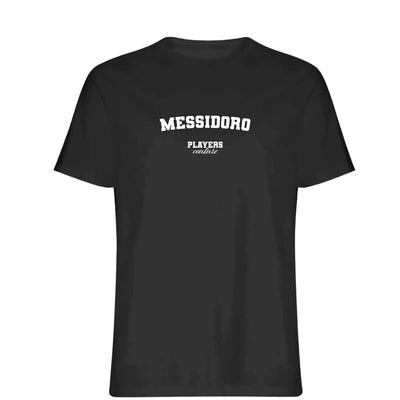
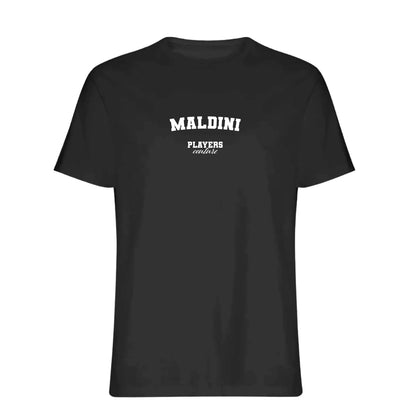
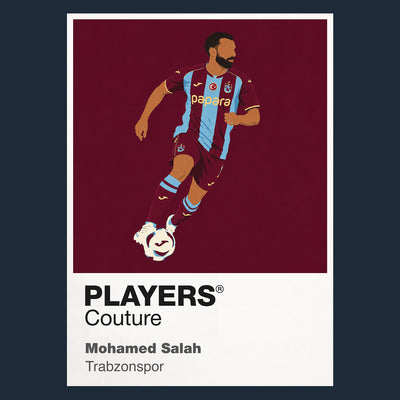
In football, an artist is the player who makes technique feel expressive. The description is not an official position and does not belong to one individual. Supporters use it for the dribbler, passer or finisher whose imagination changes what seems possible in a match. This Artist men’s T-shirt celebrates football as a creative practice, where control, timing and decision-making can turn a rigid tactical picture into something memorable.
Why football borrows the language of art
A pitch has rules and boundaries, but no two passages of play have to look the same. A player receives the ball with a limited amount of time, reads the movement around them and chooses from several possible actions. The best creative players do more than execute the obvious option. They disguise intention, alter rhythm and find space that defenders believed was closed.
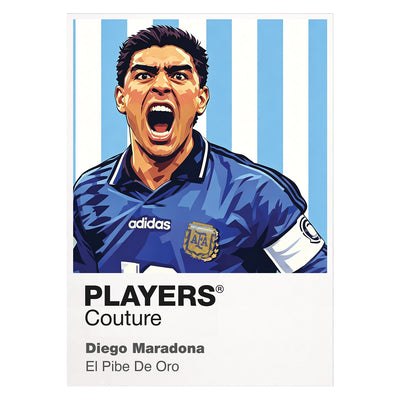
The word “artist” is often attached to number tens, wingers and attacking midfielders. Diego Maradona’s close control, Zinedine Zidane’s balance, Ronaldinho’s improvisation and Lionel Messi’s changes of direction all invite the comparison, despite their different bodies, eras and tactical roles. Women’s football has its own creators whose vision and technique shape matches. The idea crosses competitions because it describes a quality rather than a position.
Technique is prepared, not accidental
What looks spontaneous usually rests on repetition. First touch, scanning, balance and awareness are trained until the player can perform them under pressure. UEFA’s performance analysis work examines the technical, tactical and physical demands of elite football, demonstrating that creativity is connected to the team’s structure rather than floating outside it.
An artist still needs team-mates to create width, run behind the defence and offer safe passing angles. The cleverest pass is useless if nobody recognises it. Creative freedom therefore depends on shared understanding. Coaches build patterns that help gifted individuals receive in useful areas, while those individuals supply the unpredictable action that a pattern cannot fully script.
Different kinds of football artist
The classic playmaker may operate between midfield and attack, receiving on the half-turn and threading passes through defensive lines. A wide player can be an artist through one-to-one dribbling. A deep midfielder can shape tempo and switch the point of attack. A forward can create through subtle movement, layoffs and an unusual finish.
Data has expanded the way analysts describe these contributions. Assists record the final pass, but possession-value models also consider earlier actions that move a team into more dangerous territory. Research into passing networks shows that each player’s choices form part of a side’s tactical fingerprint. These approaches do not replace the eye. They help explain why a quiet pass or body movement mattered.
The supporters’ view
Fans call somebody an artist when the action creates emotional pleasure as well as competitive value. A nutmeg can lift a crowd, a disguised pass can produce a collective gasp, and a perfectly weighted through ball can be remembered alongside the goal. The language expresses gratitude for players who make the sport look less predictable.
There is also a productive tension between artists and systems. Modern elite football demands pressing, defensive positioning and repeated high-intensity movement. The contemporary creator cannot always wait for the ball. The most admired players combine invention with the work needed to earn space and regain possession.
A design for players and watchers
“Artist” can describe the gifted player in a professional stadium, the team-mate who always tries the difficult pass or the supporter who values imagination above simple efficiency. That breadth is why the word works as a Players Couture design. It does not claim endorsement by a named footballer. It turns a familiar piece of terrace language into a clean identity for anyone drawn to the creative side of the game.
Beauty still has competitive purpose
Calling a player an artist does not mean ignoring results. The most admired skill creates an advantage: a defender is beaten, a line is broken or a team-mate receives time. Beauty and effectiveness become the same action. That is why one elegant pass can remain in supporter memory long after an otherwise ordinary league match has disappeared from view.
Wearing and choosing the shirt
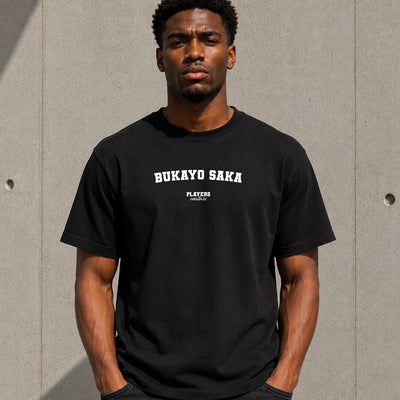
The Players Couture design treats the name as the reference, without copying a badge, portrait, poster or promotional logo. That makes it straightforward casual clothing: combine it with jeans, relaxed trousers, shorts or joggers, then add trainers and an overshirt, denim jacket or bomber. The soft ringspun cotton, regular men’s fit and crew neck are made for repeat everyday wear rather than a costume-like look.
Sizes are S, M, L, XL, 2XL and 3XL. Available colours are White, Navy, Red, Black and Gray. White gives the typography a crisp base, Black and Navy are quieter, Gray is a flexible neutral and Red makes the strongest statement. Compare the size guide with a well-fitting shirt at home and choose one size larger when a looser streetwear shape is preferred.
Made to order in the United Kingdom
Every shirt is printed in the United Kingdom once an order is placed, with free UK delivery. This made-to-order method reduces the need to keep large quantities of finished pre-printed garments across every design, colour and size. It does not mean that clothing manufacture is waste-free.
Wash inside out on a cool cycle with similar colours. Avoid bleach, direct ironing over the print and high-heat tumble drying. Air drying is preferable where practical. As a gift, it works best when the buyer checks the recipient’s usual size, preferred fit and most-worn colours. Players Couture makes independent fan-inspired apparel. This product is not official merchandise and is not endorsed by the person, team, studio or organisation associated with its subject.