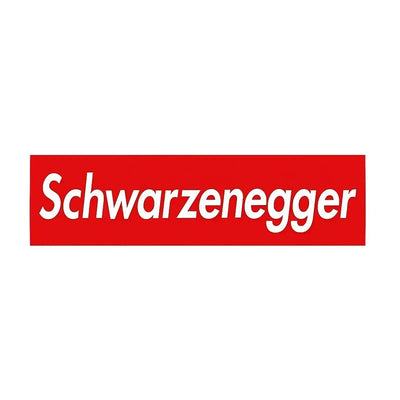
Alec Guinness, a career of remarkable range
Alec Guinness built a screen career by disappearing into roles. Audiences could recognise the quiet precision of his acting without always seeing the same persona from film to film. He moved from stage classics to sly post-war comedies, from David Lean’s large-scale dramas to an instantly recognisable character in one of cinema’s most influential science-fiction series. The name carries more than one kind of memory: a dry comic turn, a dignified dramatic performance, a thoughtful supporting role or the calm voice of Obi-Wan Kenobi. That breadth is why Guinness remains a compelling subject for a design intended for film lovers rather than fans of only one genre.
Before becoming a familiar film actor, Guinness established himself in the theatre. His stage work included Shakespeare and other classic plays, and it gave him a foundation in language, timing and character that stayed visible throughout his career. The National Portrait Gallery records his work in productions including Twelfth Night, Richard II, The School for Scandal and Trelawny of the Wells. He did not approach screen acting as a separate craft; the control and economy of his performances came from years of live work, where a small shift of expression or emphasis had to be clear to an audience in the room.
His transition to film brought an extraordinary demonstration of versatility. In Robert Hamer’s Kind Hearts and Coronets (1949), Guinness played eight members of the aristocratic D’Ascoyne family, each with a different age, manner and social position. The conceit could have been a simple parade of disguises, but Guinness made the characters distinct enough for the film’s comedy to depend on their personalities rather than on the trick itself. The BFI places this performance among the defining work of his career, alongside the Ealing comedies that made him a star. It remains a celebrated example of how technical precision can serve comic invention.
Guinness continued to work with Ealing in films such as The Lavender Hill Mob and The Man in the White Suit. These films used humour to look at ambition, convention and the systems of post-war Britain. In The Lavender Hill Mob, he played a mild-mannered bank clerk drawn into a gold bullion robbery, a role that lets the audience enjoy the distance between his respectable appearance and his improbable plan. In The Man in the White Suit, his chemist Sidney Stratton invents a fabric that will not get dirty or wear out, only to discover that a useful breakthrough threatens the interests of manufacturers and unions alike. Guinness made such characters funny without reducing them to caricatures. Their awkwardness and conviction feel recognisably human.
David Lean’s films brought a different scale. Guinness played Colonel Nicholson in The Bridge on the River Kwai (1957), a British prisoner of war whose sense of duty becomes entangled with the demands of captivity. The role earned him the Academy Award for Best Actor. He later appeared as Prince Faisal in Lawrence of Arabia and as Yevgraf in Doctor Zhivago. Across these films, he often anchored vast landscapes and historical events through stillness. Rather than compete with the scale of the setting, he gave the audience a human point of attention: a measured voice, an observant glance, a decision made under pressure. That quality explains why he could leave such a strong impression even when he was not the central character.
His range also included literary and contemporary roles. Guinness played George Smiley, John le Carré’s intelligence officer, in the television adaptations Tinker Tailor Soldier Spy and Smiley’s People. The character is far removed from the bold adventure figure often associated with espionage. Smiley listens, weighs evidence and conceals his thoughts behind an ordinary manner. Guinness made those quiet habits compelling, shaping suspense through attention rather than display. The performances helped bring a subtle, inward kind of spy story to a broad audience and showed how effectively he could hold a long narrative through restraint.
For many viewers, the name is also inseparable from Obi-Wan Kenobi in Star Wars (1977). Guinness brought an old-world gravity to the mentor who introduces Luke Skywalker to the Force and to a larger conflict. He gave the film a connection to classical adventure and drama while helping establish a character whose influence continues beyond his screen time. Obi-Wan became one of the series’ enduring figures, recognised across generations, but the performance is only one chapter in a career already rich with contrasting work. It gives younger audiences a familiar doorway into his films, while older viewers may arrive through Ealing, Lean or the theatre.
Guinness matters because his work links several important strands of British and international screen culture. He was central to the reputation of Ealing comedy, played defining roles in British epics that travelled around the world and became part of the vocabulary of modern popular cinema through Star Wars. The continuity is not a single character type but a way of working: attentive, exact and open to transformation. His performances reward repeat viewing because detail often sits in a pause, a change in posture or a carefully chosen line reading. A fan wearing his name can be celebrating a favourite film, but can also be signalling an interest in acting craft and the long life of great performances.
“Alec Guinness” works especially well as a Players Couture design because the name crosses generations and genres. It can prompt a conversation about a particular role without limiting the wearer to one film. Someone may think first of Obi-Wan; another may picture the D’Ascoyne family, Colonel Nicholson or George Smiley. The simple name-led treatment gives room for those different associations. It is an independent tribute for people who value classic cinema, British acting and characters that stay vivid long after a film has ended. It is not official film or studio merchandise.
Classic film reference, everyday wear
The garment is a men’s T-shirt in soft ringspun cotton, with a regular fit and crew neck. Its straightforward shape makes it easy to style with denim, chinos or relaxed trousers, and suitable to wear on its own or beneath an open shirt, cardigan or jacket. The design gives the name a clear place without turning the shirt into a costume piece. Wear it to a cinema screening, a film-club evening, a festival or simply as an everyday nod to an actor whose work has reached several generations of viewers.
Available in White, Navy, Red, Black and Gray, and in sizes S, M, L, XL, 2XL and 3XL. The regular men’s fit is intended for comfortable daily wear, not as a close athletic cut. If you prefer extra room, consider sizing up; checking the garment measurements against a T-shirt you already own is the best guide. White gives the name a crisp, poster-like appearance, Navy feels understated, Red adds a stronger colour accent, Black offers a versatile darker option and Gray provides a softer neutral. Choose the shade that best suits your wardrobe and the way you like to wear graphic fanwear.
Each shirt is made to order and printed in the United Kingdom. This approach reduces the need to hold large quantities of finished pre-printed stock while allowing a wide catalogue of cultural references to remain available. UK delivery is free. For care, follow the label, wash with similar colours on a cool cycle and turn the garment inside out before washing. Avoid bleach and do not iron directly over the printed area. Air drying helps protect both the cotton and the design. These simple steps support regular wear while keeping the print looking clear.