
Messi, Ronaldo, Pele or Maradona — Who Is Football's Greatest of All Time?
Football's greatest debate has no definitive answer. That is not a cop-out — it is a fact rooted in the impossibility of comparing players across different eras, different tactical systems, different levels of physical preparation and medical support, and different standards of opposition. A player who was extraordinary in 1958 was playing in conditions that the players of 2022 would barely recognise as the same sport.
And yet the debate continues, and rightly so. Because the question is not really about mathematics or statistics. It is about something more important — the question of what we value in football, what we think the game is for, and which players have come closest to answering that question perfectly.
The Case for Pele
The case for Pele rests on one incontrovertible fact: three World Cup winner's medals, achieved across three separate tournaments spanning twelve years. No other player in history has done this. No other player is likely to do it. The World Cup is the greatest prize in football. Pele won it three times. The argument, on this basis alone, is extremely strong.
Beyond the medals: more than 1,000 career goals, 77 in 92 international appearances, a sustained level of excellence across a career that lasted from 1958 to 1977. He won every domestic trophy available to him. He was, in his prime, the most technically gifted footballer the world had seen — a complete player who could score, create, dribble, head, and play in any position across the attacking line.
The argument against: we cannot verify his statistics with complete precision. We cannot watch the matches and judge them by modern standards, because the footage does not exist in sufficient quality. And the opposition he faced, at club level particularly, was of a significantly lower standard than what Messi and Ronaldo have faced in their careers.
The Case for Maradona
Maradona's case is built on a single tournament — Mexico 1986 — and what he did in it. No player has ever dominated a World Cup so completely. He scored five goals and made five more. He scored both the most notorious goal and the greatest goal in the tournament's history, in the same match. He carried Argentina, a team of reasonable but not exceptional players, through a World Cup and to the trophy almost single-handedly.
Beyond 1986: the transformation of Napoli from a club that had never won a league title to Italian champions, achieved in a city that treated him as a god. His record of 34 goals in 91 international appearances understates his influence, because Maradona created as much as he scored. He was the engine, the creator, and the finisher of every team he played in.
The argument against: his career was significantly shorter than Pele's, Messi's or Ronaldo's at the elite level, partly because of the lifestyle choices that affected his physical condition. His club career outside Napoli was less consistently excellent. And the 1986 World Cup, for all its brilliance, was a single tournament rather than a sustained career.
The Case for Messi
Lionel Messi has won the Ballon d'Or eight times. He has scored more than 800 career goals. He has won ten league titles. He won the World Cup in 2022 at the age of 35, in what many regard as the greatest individual World Cup performance since Maradona in 1986. He has created as many goals as he has scored, which is what separates him from pure strikers — he has elevated every teammate he has played alongside.
The argument for Messi is, at its heart, an argument about completeness. He does everything — scores, creates, dribbles, leads, and makes the players around him better. His football IQ is the highest the game has seen. And unlike Maradona, whose genius was concentrated in a shorter window, Messi has produced this level of excellence for twenty years.
The argument against: some believe that Messi's greatness was partly a product of the extraordinary Barcelona team around him. Pep Guardiola's system, Xavi and Iniesta's midfield creativity, the structure that allowed Messi to receive the ball in dangerous positions — these were exceptional supporting conditions. How would he have performed without them?
The Case for Ronaldo
Cristiano Ronaldo's case is the most statistically overwhelming of the four. More than 900 career goals. The all-time record for international goals. Five Champions League titles. League titles in four different countries. Five Ballon d'Or awards. A physical preparation so meticulous that he was still performing at the elite level at 38 years old.
The argument for Ronaldo is an argument about will — about what a human being can achieve when they decide to push themselves to the absolute limit of their physical and mental capacity. He was not born with Messi's natural gifts. He made himself, through extraordinary dedication, into one of the two finest players of his generation.
The argument against: Ronaldo's game is fundamentally about goalscoring, and while goalscoring is the most important thing in football, it is not the only thing. He has not elevated teammates in the way that Messi has. He has not won the World Cup. And the debate about whether his Saudi Arabia statistics should be included in any serious comparison of his late career is legitimate.
Who Else Comes Close?
The GOAT debate usually focuses on four players — Pele, Maradona, Messi, Ronaldo. But there are others who deserve consideration.
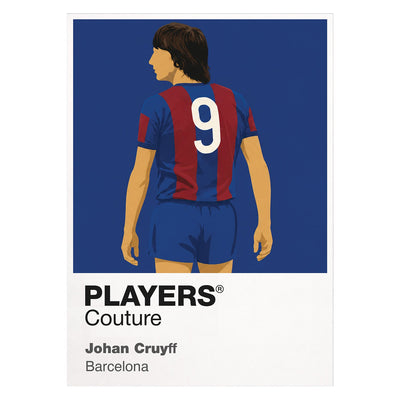
Johan Cruyff, who developed the philosophical framework on which Messi's Barcelona career was built, was arguably the finest European footballer of his generation. His Total Football concept changed the sport permanently. His Ballon d'Or wins in 1971, 1973 and 1974 speak to sustained excellence. He never won the World Cup, but his influence on football extends far beyond trophies.
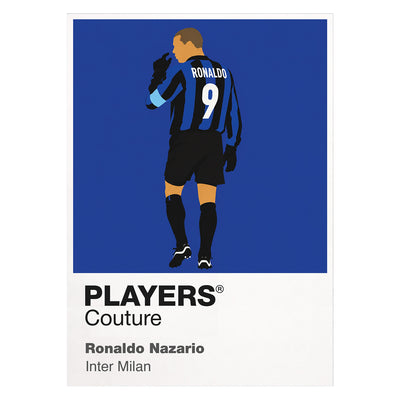
Ronaldo Nazario — R9, The Phenomenon — in his physical prime from 1996 to 2002 was possibly the most devastating centre-forward the sport has ever seen. The knee injuries that interrupted and ultimately curtailed his career prevent a fuller comparison, but the 1997 season at Barcelona and the 2002 World Cup suggest that, fully fit across his career, he might have challenged the very top of this list.
Zinedine Zidane. Franz Beckenbauer. George Best. Eusébio. Ronaldinho. Garrincha. The list of players who played football at a level that demanded the word "genius" is longer than any list of this kind can fully accommodate.
The Verdict
If forced to rank them: Messi first, Pele second, Maradona third, Ronaldo fourth. The reasoning: Messi's combination of sustained excellence, creative intelligence, and World Cup triumph in 2022 is the most complete package the game has produced. Pele's three World Cup medals give him an argument that nothing can fully overcome, but the era in which he played prevents complete certainty. Maradona's single tournament of absolute genius is the most extraordinary individual performance the sport has seen, but a career cannot be judged on a single tournament alone. Ronaldo's statistics are remarkable but his game is narrower and he never won the World Cup.
But this is one opinion. The debate will continue for as long as football is played. And that is, ultimately, one of football's greatest gifts — the arguments it generates, the passion it inspires, the endlessness of the conversation.
Shop the Lionel Messi Classic Logo T-Shirt, browse the Argentina collection, and explore the full World Cup 2026 range at Players Couture.







0 comments