
The Story of Pele — The Greatest Footballer Who Ever Lived
There is a reasonable argument that Pele is the most famous athlete in the history of sport. Not just football — sport. In the 1960s and 1970s, at the height of his powers, he was recognisable in every country on earth. He once stopped a war. The Nigerian civil war paused for 48 hours in 1967 so that both sides could watch him play in Lagos. That is a sentence that applies to no other person in the history of sport.
He is the only player ever to win three World Cup winner's medals. He scored more than 1,000 career goals. He was, for the better part of two decades, the most exciting footballer on the planet. And when he died on 29 December 2022, at the age of 82, the world stopped to remember him.
The Early Years — Born Into Nothing
Edson Arantes do Nascimento was born on 23 October 1940 in Três Corações, a small town in the state of Minas Gerais in Brazil. His family had almost nothing. His father, Dondinho, was a footballer of some ability but never achieved the heights his talent promised. His mother opposed football — she feared it would bring the same heartbreak it had brought her husband.
Pele — the nickname's origin is disputed, possibly a corruption of "Pilé," a goalkeeper he admired — played barefoot on the streets of Bauru, where his family had moved. He stuffed socks with newspaper to make balls. He cleaned boots at the local stadium for money. He played with borrowed shoes.
At fifteen, he signed for Santos FC. At sixteen, he made his first division debut. He scored on his debut. His career had begun.
1958 — The World Cup at Seventeen
Brazil had never won the World Cup when they arrived in Sweden for the 1958 tournament. They had been runners-up in 1950, losing the decisive match to Uruguay on home soil in what became known as the Maracanazo — a defeat so traumatic that it scarred an entire generation of Brazilian football.
Pele almost didn't make the tournament. A knee injury kept him out of the early group matches. When he returned, he was seventeen years old — the youngest player to appear in a World Cup at that point. In his first match, against the Soviet Union, he was quiet. Against Wales in the quarter-final, he scored the only goal of the game — a composed, clinical finish that showed the world what was coming.
Against France in the semi-final, he scored a hat-trick. In the final against the hosts, Sweden, he scored twice — including a chest control and volley of extraordinary audacity that left Swedish defenders, and Swedish supporters, open-mouthed. Brazil won 5-2. Pele, seventeen years old, broke down in tears at the final whistle. His teammates had to carry him.
The world had found its next great player. It would not let him go for the next fifteen years.
1962 — The World Cup He Missed
Brazil returned to defend their title in Chile in 1962. Pele played brilliantly in the opening matches — and then tore a muscle in the second group game and played no further part. Brazil won without him, with Garrincha stepping up to carry the team on his remarkable, bow-legged shoulders. Pele collected his second winner's medal without being able to contribute to the triumph on the pitch.
It was the only World Cup he did not fully participate in. And yet Brazil won it anyway, which tells you something about the extraordinary depth of that generation of Brazilian football.
1966 — The World Cup That Nearly Broke Him
England 1966 was the lowest point of Pele's World Cup career. He was brutally fouled throughout the tournament — in particular by Portuguese defender João Morais in the group stage, in a tackle so violent that it left Pele limping off the pitch. The referee took no action. Pele said afterwards that he would never play in a World Cup again.
He kept that promise. He was left out of Brazil's squad for the next qualifying campaign. Brazil, without their greatest player, failed to qualify for the 1970 World Cup by normal means. They needed a playoff.
And then Brazil convinced him to come back. And he did. And everything changed.
1970 — The Greatest World Cup Performance of All Time
The 1970 World Cup in Mexico is widely regarded as the greatest tournament ever played, and Brazil's team of that year is widely regarded as the greatest international side ever assembled. Pele, thirty years old and in his final World Cup, was their captain and talisman.
He had his attempted lob from the halfway line against Czechoslovakia — the goalkeeper scrambling back to collect as the ball went just wide. He had the headed effort against Uruguay that he sold the goalkeeper on completely, running past the ball at the last second, only for it to go inches wide of the post. He had the famous dummy in the final against Italy — running past the ball completely as it came to him in space, leaving Italian defender Mazzola flat-footed, before Pele moved on and delivered the pass for Carlos Alberto's thunderous finish to seal a 4-1 victory.
He scored four goals in the tournament. He created countless others. Brazil played the most beautiful football the World Cup has ever seen, and Pele was at the centre of all of it.
He lifted the trophy for the third time. No one has done it before or since.
The Records That Will Never Be Broken
Pele scored 77 goals in 92 appearances for Brazil. He scored 643 goals for Santos in 659 official matches. His total career tally, including friendlies, is given as 1,281 goals in 1,363 games — a number that may be impossible to verify precisely, but whose general magnitude is not in doubt.
He won three World Cups. He won two Copa Libertadores titles with Santos. He won the Brazilian championship ten times. He was voted Athlete of the Century by the International Olympic Committee. He was named FIFA's joint Player of the Century alongside Maradona.
The Man Beyond the Football
Pele was more than a footballer. He was a cultural ambassador, a symbol of Brazilian identity, and — at times — a political figure. His autobiography, his films, his charity work, his role as Brazil's Minister of Sport in the 1990s all spoke to a figure who understood that his fame carried responsibilities beyond simply playing football.
He was not without controversy. His relationship with the Brazilian military dictatorship of the late 1960s and early 1970s drew criticism. His personal life was complicated. But the grace with which he carried himself in the final years of his life — frail, ill, but always dignified — earned him enormous affection.
When he died, Brazil declared three days of national mourning. His coffin was carried through the streets of Santos. More than 230,000 people filed past to pay their respects.
The Greatest of All Time?
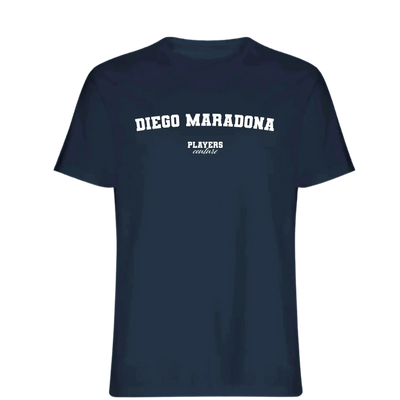
The debate about who is the greatest footballer ever will never be fully resolved. Maradona's supporters will point to 1986. Messi's supporters will point to the sustained excellence across two decades, the Copa America, the World Cup in Qatar. Ronaldo's supporters will make their arguments about records and adaptability.
But Pele's case rests on something none of them can match — three World Cup winners' medals, achieved across three different tournaments spanning twelve years. The sport has never produced anything quite like it, and may never do so again.
Shop the Brazil collection at Players Couture and celebrate the country that produced the greatest player football has ever seen.









0 comments