
The Story of the 1974 World Cup — Total Football and the Dutch Masters
The 1974 World Cup in West Germany produced one of the most significant tactical revolutions in football history. A Dutch team built on the philosophy of "Total Football" — in which every player could play in every position, and the team as a whole contracted and expanded like a breathing organism — arrived in West Germany and played football that had never been seen before. They did not win the tournament. But they changed football permanently.
Brazil Without Pele — The End of an Era
The defending champions arrived without Pele, who had retired from international football after 1970. They were a very different side — more physical, more pragmatic, less beautiful than the 1970 vintage. They finished third. The era of Brazilian dominance, built on the golden generation of 1958-70, was over. Football was changing.
Johan Cruyff and Total Football
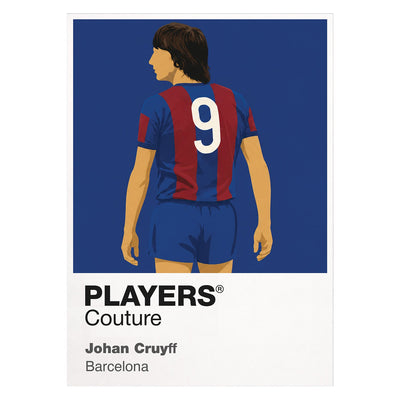
Johan Cruyff was the finest European footballer of his generation and, for many, the finest European player the game has ever produced. He was the embodiment of the Total Football philosophy developed by Dutch manager Rinus Michels at Ajax — fluid, intelligent, technically magnificent, capable of playing anywhere on the pitch, and possessed of a footballing brain that functioned at a speed most players could not match.
His Netherlands team of 1974 was the tournament's finest. They beat Uruguay, Sweden, Bulgaria, Argentina, East Germany and Brazil without losing a match before the final. Against Brazil in the second group stage — effectively a semi-final — they played some of the finest football the World Cup had ever seen, winning 2-0 against the defending champions' successors.
The famous Cruyff Turn — the feint in which he dragged the ball behind his standing leg and changed direction in a single movement — was unveiled to the world in a group match against Sweden. The Swedish full-back Jan Olsson, who was turned inside out by it, later said it was the moment he realised he was watching something entirely new.
The Final — West Germany's Triumph
The final was played in Munich on 7 July 1974. Netherlands kicked off, played eleven passes without a West German player touching the ball, and were awarded a penalty when Cruyff was brought down in the box. Johan Neeskens scored. Netherlands led before West Germany had touched the ball.
They did not score again. West Germany, organised, physical, and led by the imperious Franz Beckenbauer, equalised through a penalty of their own before half-time and then scored the winner through Gerd Müller just before the break. The second half was tense and goalless. West Germany won 2-1 on home soil.
Netherlands — who had played the most beautiful football of the tournament — went home without the trophy. It is the most celebrated failure in World Cup history. Total Football had changed the game. It simply had not won the game's greatest prize.
Franz Beckenbauer — Der Kaiser
West Germany's captain and organising force was Franz Beckenbauer — "Der Kaiser." He was the most elegant defender of his era, a sweeper who brought the ball out of defence with composure and authority, and who read the game with the same intelligence Cruyff brought to attacking football.
He had been on the losing side in the 1966 World Cup Final against England, and on the losing side when West Germany were knocked out by England in the 1970 quarter-final (though he played the second half of that match with a dislocated shoulder strapped to his body, because West Germany had already used their substitutes). In 1974, he lifted the trophy as captain. He would later manage the West German side that won the 1990 World Cup — the only man to have won the World Cup as both player and manager.
Browse the Germany collection at Players Couture.
The Legacy of 1974
The 1974 World Cup fundamentally changed how football was conceptualised. Total Football — the idea that positional play was fluid, that pressing was collective, that every player needed technical quality regardless of position — became the dominant philosophical influence on the game for the next fifty years. Guardiola's Barcelona, Klopp's Liverpool, the Spanish national team's tiki-taka — all of them trace their intellectual ancestry back to Rinus Michels and Johan Cruyff and the Netherlands team of 1974.
That the team which produced the most influential football in World Cup history did not win the tournament is one of the sport's great ironies. But football's history is full of such ironies. The Dutch would return in 1978 for another final. They would lose again. The trophy would never come. But the philosophy would outlast every trophy ever won.
Shop the World Cup collection at Players Couture and browse our Classic World Cup Sticker Icons.







0 comments