Cassius Clay v Sonny Liston Men’s Hoodie – Iconic Heavyweight Fight Clothing
Celebrate one of the most important rivalries in boxing history with the Cassius Clay v Sonny Liston Men’s Hoodie from Players Couture. Designed for heavyweight fanatics, boxing historians and everyone inspired by the night a confident young challenger overturned the predictions of almost every expert, this hoodie captures a defining moment in sporting culture.
A colourful, poster-style graphic of Cassius Clay and Sonny Liston is positioned on the left chest. The compact badge placement gives the hoodie a modern, versatile appearance while preserving the drama associated with this historic championship encounter. It offers fans a more wearable alternative to traditional oversized fight merchandise.
The first Clay–Liston contest brought together a champion feared throughout the heavyweight division and a challenger many observers considered too inexperienced for the assignment. Sonny Liston possessed brutal strength, an enormous reach and a punishing jab. Cassius Clay relied on speed, reactions, movement and complete confidence in his ability to change boxing.
Their meeting in Miami Beach on 25 February 1964 was more than a conventional heavyweight championship fight. It represented a confrontation between two completely different personalities, boxing styles and generations. The result would change the public image of the heavyweight champion forever.
How Sonny Liston Reached the Heavyweight Championship
Sonny Liston’s exact date of birth was uncertain, reflecting the hardship and limited records surrounding his early life in rural Arkansas. He came from a large family and experienced severe poverty before eventually moving to St Louis.
Liston discovered boxing while serving a prison sentence. Coaches immediately recognised his physical gifts, particularly the size of his hands, strength of his jab and natural ability to generate power. After a short but successful amateur career, he turned professional in 1953.
His rise was interrupted by legal difficulties and controversy, but his performances inside the ring became impossible to ignore. Liston defeated many of the leading contenders of his era, including Cleveland Williams twice, Nino Valdes, Zora Folley and Eddie Machen.
Liston combined raw power with more technical skill than his intimidating reputation sometimes suggested. His left jab could control a contest by itself, while his ability to trap opponents made his hooks and uppercuts extremely dangerous.
He challenged Floyd Patterson for the heavyweight championship in September 1962 and won by knockout in the first round. A rematch ten months later lasted only four seconds longer, with Liston again stopping Patterson during the opening round.
The two victories created an impression of total dominance. Liston had dismantled an accomplished champion twice without completing a combined two rounds. Few observers believed Cassius Clay could avoid the same fate.
The Rise of Cassius Clay
Clay began boxing in Louisville after his bicycle was stolen when he was 12. Police officer Joe Martin operated a local boxing gym and suggested that the angry youngster should learn how to fight before attempting to confront the thief.
Clay progressed into one of America’s finest amateurs. His speed and unusual movement separated him from other fighters, while national Golden Gloves and AAU honours led to selection for the 1960 Olympic Games.
Competing at light-heavyweight in Rome, Clay won the gold medal. He returned to the United States and began a professional career that generated interest through both performances and personality.
Clay predicted the rounds in which opponents would fall, produced rhymes at press conferences and taunted established fighters. He called himself the greatest before he possessed a professional championship to support the claim.
Inside the ring, he backed up much of the talk. Clay defeated veteran former champion Archie Moore and earned a close decision over Doug Jones. At Wembley Stadium, Henry Cooper dropped him heavily with a left hook, but Clay recovered and won when cuts forced the fight to be stopped.
By the time he challenged Liston, Clay held an unbeaten 19–0 professional record with 15 stoppage victories. However, the vulnerability shown against Cooper and the champion’s fearsome reputation left most experts convinced that the challenger would be knocked out.
Bear Hunting and the Psychological Contest
Clay began challenging Liston long before the first bell. He repeatedly described the champion as a bear, appeared outside Liston’s home and created theatrical scenes during public appearances.
At the weigh-in, Clay’s shouting and movement caused his heart rate and blood pressure to rise dramatically. Some observers believed he had lost control through fear. After he calmed down and passed a second medical examination, it became clear that much of the performance had been deliberate.
Clay understood that Liston was accustomed to frightening opponents. By behaving unpredictably and refusing to show conventional respect, the challenger attempted to reverse the psychological pressure. He wanted the champion to believe that he was facing someone who could not be intimidated.
Six Rounds That Changed Boxing
The strategy continued inside the Miami Beach ring. Clay moved quickly during the opening round, making Liston reset his feet every time he attempted to attack. The challenger’s jab and combinations arrived with unusual speed for a heavyweight.
Liston occasionally succeeded in closing the distance, but Clay repeatedly escaped before the champion could sustain his work. As the rounds progressed, punches began marking Liston’s face and increasing his frustration.
The fifth round presented Clay with a serious crisis. He returned to his corner complaining that his eyes were burning and that he could not see. Trainer Angelo Dundee cleaned his face and refused the fighter’s request to remove his gloves.
Clay used movement and holding to survive until his sight returned. By the sixth, he was again landing fast combinations and controlling much of the action. Liston returned to his corner with an injured left shoulder and did not answer the bell for round seven.
The arena initially struggled to understand what had happened. Clay moved towards the centre of the ring and celebrated as officials confirmed that Liston had retired. The seven-to-one underdog was the new undisputed heavyweight champion at 22 years old.
Clay ran to the journalists at ringside who had predicted his defeat and demanded recognition. The result was not simply a championship upset. It announced the arrival of a sportsman whose voice, identity and influence would extend far beyond boxing.
Muhammad Ali and the Second Liston Fight
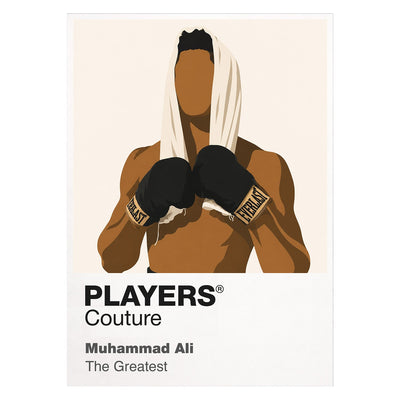
After defeating Liston, Clay announced his connection with the Nation of Islam and changed his name, becoming Muhammad Ali. It is therefore historically accurate to describe the first contest as Cassius Clay v Sonny Liston and the second as Muhammad Ali v Sonny Liston.
The rematch was originally scheduled for November 1964, but Ali required emergency surgery for a hernia. A rescheduled event in Boston encountered licensing problems and was moved to Lewiston, Maine.
The fighters met again on 25 May 1965. During the opening round, Liston moved forward behind his jab. Ali pulled away and landed a short, exceptionally fast right hand that sent the former champion to the canvas.
Ali stood over Liston, shouting at him to rise. The resulting image became one of the most famous photographs in sporting history. Referee Jersey Joe Walcott attempted to move Ali to a neutral corner while the ringside timekeeper continued the count.
Liston eventually regained his feet and the fight briefly continued. Walcott was then informed that Liston had remained down beyond the count of ten and stopped the contest after one minute and 44 seconds.
Many spectators had not seen the punch clearly, leading it to become known as the phantom punch. Some questioned whether it carried enough force to end the contest, while slow-motion footage showed Ali landing a rapid counter as Liston moved forward. The confusion surrounding the count ensured that the finish would remain debated for generations.
Despite the controversy, the two fights produced an unmistakable change in heavyweight boxing. Liston’s intimidating championship reign was over, while Ali had begun a journey that would make him one of the most celebrated and influential athletes in history.
Historic Boxing Fanwear for Everyday Life
The Cassius Clay v Sonny Liston Men’s Hoodie is ideal for live fight nights, boxing conventions, sports-bar gatherings, documentary evenings and casual weekends. Wear it while watching modern heavyweights or debating the greatest championship upsets with friends.
Pair it with jeans and trainers for an everyday casual look, or combine it with joggers while revisiting classic fight footage at home. The colourful left-chest design adds sporting history to the garment without making it difficult to coordinate.
This hoodie makes a memorable gift for a father, grandfather, husband, partner, brother, son, friend, boxer or coach. It is particularly suited to Muhammad Ali fans, Sonny Liston admirers and collectors of clothing inspired by iconic sporting events.
Colours and Men’s Sizes
The hoodie is available in:
- White
- Black
- Red
- Navy
- Grey
Men’s sizes run from S to 3XL. Black, Navy and Grey offer versatile everyday choices, White creates a clean background for the artwork, and Red provides a bolder boxing-inspired option.
Made to Order with Good-Faith Intentions
No finished hoodie is produced until an order has been placed. Players Couture uses a made-to-order model rather than manufacturing large quantities of speculative stock. This approach allows us to create clothing celebrating an extensive selection of sporting heroes and moments without holding unnecessary finished inventory.
This design has been created in good faith as a fan tribute. It is not intended to mislead customers or infringe intellectual property rights. Fair usage is asserted where applicable, and Players Couture will remove the design if its positive intentions are not accepted.
We hope to develop collaborations with the families, estates and appropriate representatives connected to the fighters featured in our collection. Where suitable agreements can be established, our ambition is to provide royalties or make appropriate charitable contributions from qualifying sales.
Explore more clothing inspired by heavyweight champions, famous rivalries and defining moments in the Players Couture boxing collection.
Choose your preferred colour and size and carry a piece of heavyweight history with the Cassius Clay v Sonny Liston Men’s Hoodie from Players Couture.